
Stainless Steel Tile Trim: Profiles, Finishes, and Applications
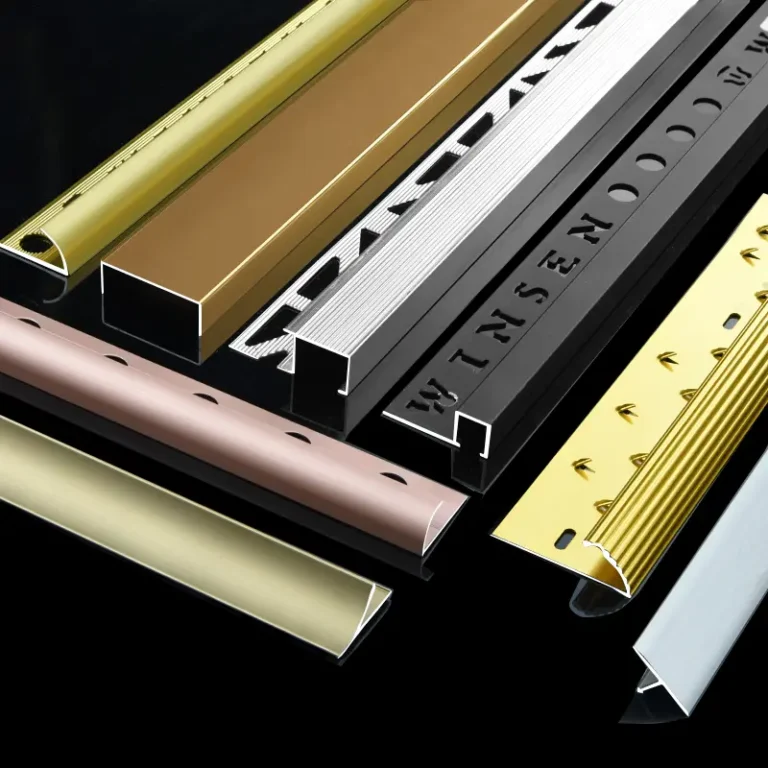
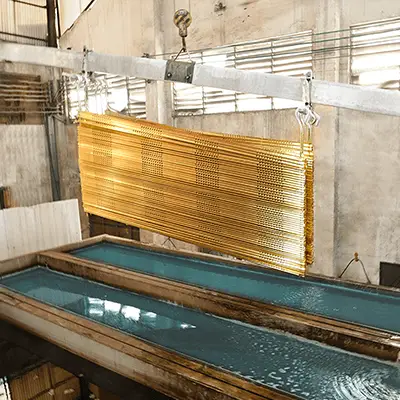
Every unprotected corner is a chip waiting to happen, and every wall-to-floor transition is a moisture entry point. In high-traffic hospitality, healthcare, and marine environments, this vulnerability compounds daily under foot traffic, cart wheels, and cleaning cycles. We position stainless steel tile edge trim as the definitive answer: a mechanical barrier engineered to absorb impact and an aesthetic finish line engineered to look intentional. 1. Why 304 and 316 Stainless Steel? During chromizing, chromium atoms diffuse into the alloy’s surface and react instantly with oxygen to form a passive chromium-oxide layer just nanometers thick. Unlike a paint or powder coating, this layer is self-healing: scratch it, and the exposed chromium re-oxidizes on contact with air, restoring the barrier. This is the mechanism behind every 304 stainless steel tile trim and 316-grade tile edge trim stainless steel profile we produce — protection generated by the metal itself, not applied to it. This intrinsic chemistry gives our stainless steel tile edge trim immunity to rust, moisture absorption, and chemical corrosion that aluminum and painted steel cannot match without secondary coatings that eventually wear, chip, or peel. There is no laminate to fail, no sealant layer to reapply. Submerged, splashed, or humid, the
Aluminium Tile Trim: Pros, Cons, and Uses
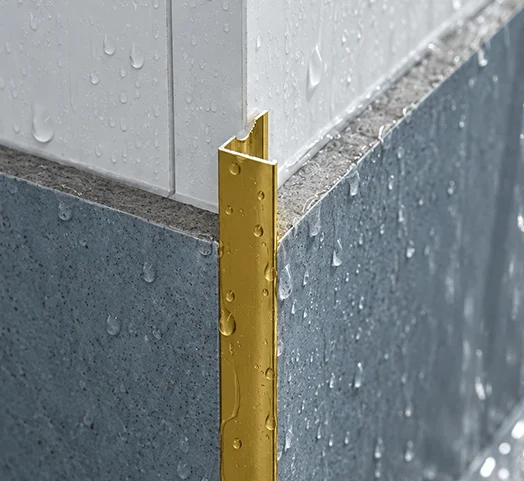
This guide breaks down where aluminium tile trim excels, where it falls short, and how to install and maintain it correctly — whether you’re sourcing aluminium edge trim for tiles on a single bathroom or specifying an aluminium tile trim profile across an entire commercial floor. Pros of Aluminum Tile Trim A dropped tool or rolling cart concentrates kinetic energy on an exposed tile edge — the “sweeper effect” that chips glaze and fractures corners. Our extruded aluminum tile edge trim absorbs that load across a rounded bead instead of a brittle lip. At wet-area transitions like showers and kitchen floors, the same profile forms a waterproofing seal against capillary intrusion. Because aluminum skips the wet-set curing ceramic bullnose demands, installation runs up to 25% faster, and its softened corners meet code for commercial safety. Aluminum Trim Profiles and Aesthetics Profile shape is where aluminium tile trim earns its design credibility. L-shaped trim delivers a minimalist, near-invisible edge that lets the tile field read as continuous, while square box profiles frame the same surface with a pronounced, architectural border — a favorite for feature walls. Round and cove profiles solve a sanitary problem: their radiused inside corners eliminate the
Aluminum vs Stainless Steel Tile Trim: Which Wins?
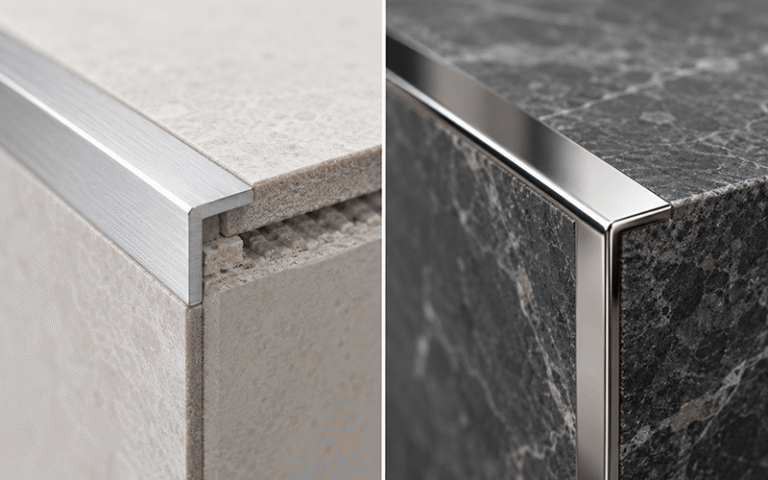
The global metal tile trim market was valued at US2,129 million in 2024 and is forecast to reach US3,282 million by 2031, a 6.3% CAGR. 1. Edge Protection A glazed ceramic bullnose was fired alongside the field tile, and the transition was closed. Rectified, large-format porcelain ended that. Slabs pressed at 1200x2400mm and cut to a 90-degree mechanical edge cannot be economically produced with a matching bullnose product, and the fired glaze rarely wraps a 12mm porcelain body cleanly. 2. Stainless Steel (304/316) Profiles At roughly 18% chromium, grade 304 forms a passive chromium-oxide film only nanometers thick that regenerates on contact with oxygen the instant it is scratched — self-healing protection no surface treatment can replicate. Grade 316 adds 2–3% molybdenum, extending that immunity to chlorides and coastal salt spray. Stainless steel tile edge trim carries the mass and yield strength required where impact resistance is non-negotiable: commercial kitchens, hospital corridors, public transit hubs. It tolerates caustic industrial cleaning agents and steam without surface degradation, and it is 100% recyclable at end of life. 3. Anodized & Coated Aluminum Profiles Aluminum cuts freight cost per linear meter and can be mitered on site with a standard non-ferrous
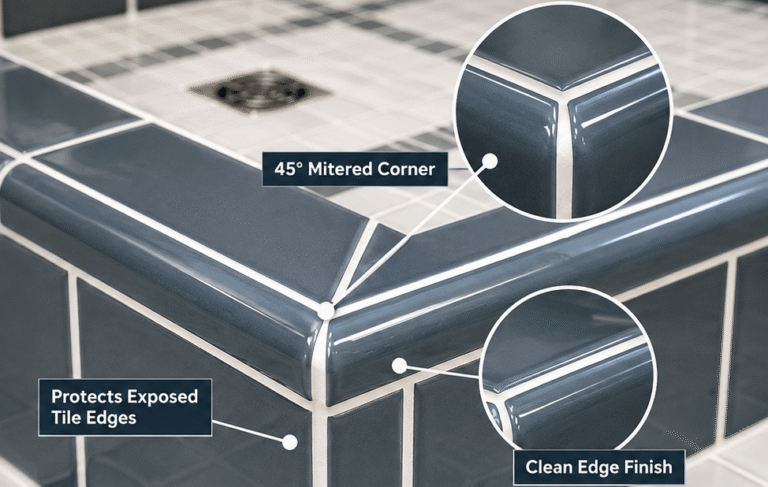
The Ultimate Guide to Tile Edge Trims: Bullnose vs. Metal Profiles vs. Mitered Corners vs. LED Integration
Tile Edge Protection The Ceramic Tile Foundation documents a telling case: A hotel breakfast area finished in wood-look ceramic flooring, installed without protective edge trim. Within months, the daily impact of a housekeeper’s industrial sweeper against the exposed, un-trimmed edge caused irreparable chipping, degrading a multi-thousand-dollar installation and eroding guest confidence in tile as a durable surface. Kinetic stress absorption, not decoration, is the real function of edge trim, and the trim & molding industry’s projected climb from 68.4 billion in 2025 to 112.7 billion by 2034 confirms that professionals increasingly treat edge protection as non-negotiable infrastructure. (Statics from Molding & Trim Market) Bullnose Bullnose is a factory-fired ceramic or porcelain piece with a rounded, manipulated edge that creates a seamless transition into drywall or adjacent flooring. Rectangular bullnose trims run long linear stretches on shower walls and backsplashes, while square bullnose pieces close out mosaic borders and checkered floor terminations. Metal Profiles L-shaped trim deliver crisp 90-degree wall terminations; cove-shaped profiles use an internal radius to resist mold and biofilm at wet inside corners; stair-nosing and floor-to-tile transition profiles carry slip-resistant surfaces engineered for heavy structural loads. Anodized aluminum is lightweight and corrosion-resistant but softer under commercial foot traffic.

Reliable aluminum led profile manufacturers in China
Introduction The aluminum LED profile is a very popular lighting material in lighting engineering, it can make many amazing lighting ideas. There are many specialized companies specializing in aluminum led profile lighting. If you are looking for the best aluminum LED profile manufacturers in China. This is the right place.Let’s take a look at this post about the top aluminum LED profile manufacturers in China. 1. TANGOO LED Company The headquarter of TANGOO LED Company is located in Foshan, the aluminum capital of China.As one of the famous aluminum LED profile manufacturers in china, we cooperate with the famous aluminum plant and can produce 200 tons per month. The aluminum plant adopts advanced Aluminum LED profile equipment and aluminum anodizing and powder spraying treatment. They have complete aluminum manufacturing systems and quality control.Tangoo LED has set up a plastic extrusion plant in the nearby city of Zhongshan, with a production area of 2,000 square meters and 15 PC, PMMA, and silicon production lines. We carry out strict quality control on the extrusion plastic diffuser. We also offer UV and fire certified LIDS. All our aluminum LED profiles are CE and RoHS-certified. Some of our products are patented.The basic concept of Tangoo is to create high-quality aluminum LED profiles
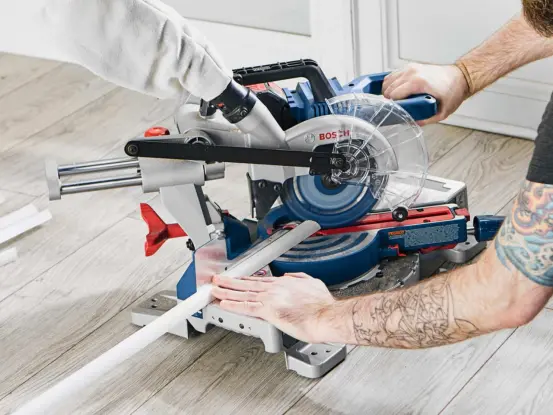
How to cut Aluminum Trim: A Comprehensie Guide
Introduction If you’re looking to enhance your home or project with aluminum trim, you may have questions about how to cut aluminum trim effectively,What Types of Aluminum Trim Are Available? This article will address common concerns, such as the various types of aluminum trim available and the best cutting methods suited for each. We’ll explore the characteristics of aluminum trim that make it a popular choice for both aesthetic and functional applications. By the end, you’ll have a clear understanding of how to cut aluminum trim safely and efficiently, ensuring a professional finish for your projects. Tools You Can Use: 1.Miter Saw Applicable Situations: The miter saw is ideal for high-volume cutting and precise straight or angled cuts. Whether you’re working on window frames, door trims, or other aluminum trim pieces, this tool provides an efficient cutting solution. Features: This tool offers fast and accurate cutting, making it perfect for mass production. It can easily handle various angles such as 45° and 90°, ensuring perfect joints during installation. Using fine-toothed carbide-tipped blades (80T and above) significantly reduces chipping, enhancing the quality of the finished product. Recommended Pairing: Opt for carbide-tipped blades specifically designed for aluminum, with a tooth count between