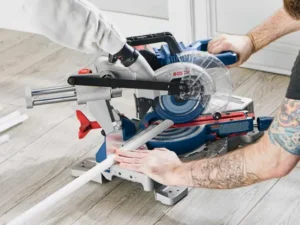
This guide breaks down where aluminium tile trim excels, where it falls short, and how to install and maintain it correctly — whether you’re sourcing aluminium edge trim for tiles on a single bathroom or specifying an aluminium tile trim profile across an entire commercial floor.
Pros of Aluminum Tile Trim
A dropped tool or rolling cart concentrates kinetic energy on an exposed tile edge — the “sweeper effect” that chips glaze and fractures corners. Our extruded aluminum tile edge trim absorbs that load across a rounded bead instead of a brittle lip.
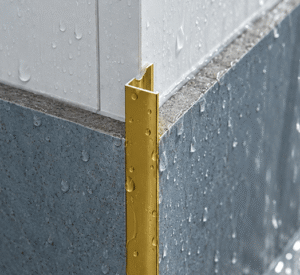
At wet-area transitions like showers and kitchen floors, the same profile forms a waterproofing seal against capillary intrusion. Because aluminum skips the wet-set curing ceramic bullnose demands, installation runs up to 25% faster, and its softened corners meet code for commercial safety.
Aluminum Trim Profiles and Aesthetics
Profile shape is where aluminium tile trim earns its design credibility.
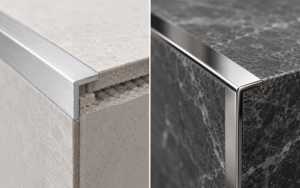
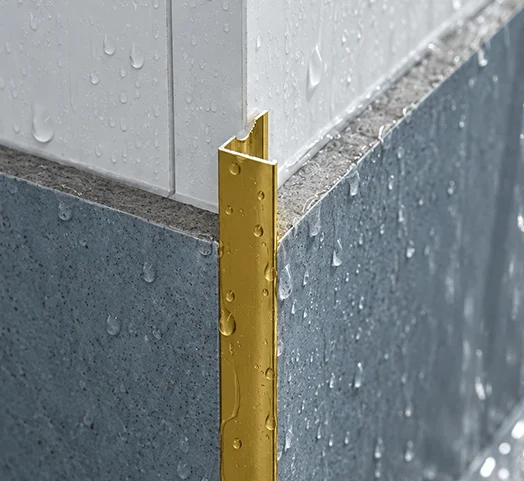
L-shaped trim delivers a minimalist, near-invisible edge that lets the tile field read as continuous, while square box profiles frame the same surface with a pronounced, architectural border — a favorite for feature walls.
Round and cove profiles solve a sanitary problem: their radiused inside corners eliminate the 90-degree grout joints where bacteria and moisture collect, making them standard for aluminium tile corner trim in hospital and food-service settings.
A third trend we now produce at scale is the trimless mud-in LED profile, where the aluminum channel doubles as a heat sink, safely dissipating thermal load from embedded lighting strips.
Cons of Aluminum Tile Trim
Compared to 304-grade stainless steel, aluminum is a considerably softer metal, making it more susceptible to dings, denting, and scratching under heavy foot traffic or blunt impact. A dent does more than mar the anodized finish; it deforms the protective barrier the trim was installed to provide, exposing the tile edge beneath again.
For high-traffic or industrial-grade projects, we recommend evaluating stainless steel trim alongside aluminium tile edge trim before specifying at scale.
Thermal Reflection in Extreme Climates
Aluminum can reflect heat effectively in extremely hot climates, a property that can work for or against a project depending on placement.
On shaded façades or covered walkways, that reflectivity helps limit surface heat buildup around tile edges.
On unshaded, south-facing exterior applications in high-UV regions, the same reflective quality can redirect radiant heat toward adjacent surfaces or occupants.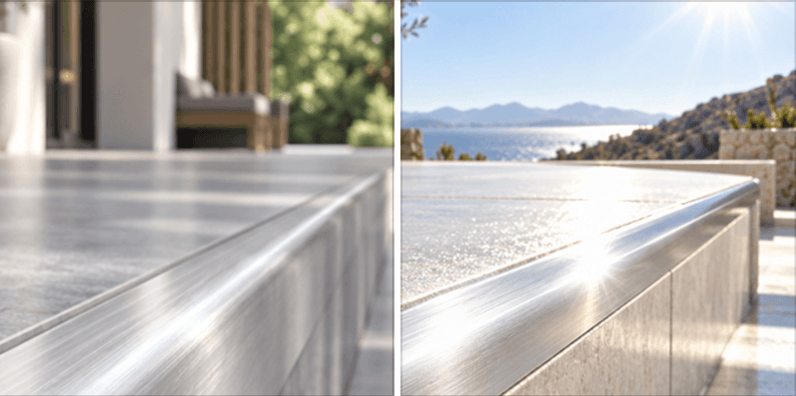
Avoiding 5 Common Mistakes
Precision installation protects the warranty we stand behind.
Mistake 1 | skipping substrate prep — the surface must be flat, clean, and primed before trim placement. |
Mistake 2 | dry-setting the trim without full mortar bedding beneath the flange, leaving voids that crack under load. |
Mistake 3 | using a standard miter saw instead of a carbide or diamond blade rated for aluminum, causing burred, uneven cuts. |
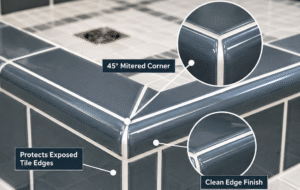
Mistake 4 | forcing tight aluminium tile trim corners without a proper tile trim cutter for 45-degree miters, resulting in visible gaps. |
Mistake 5 | fastening trim before the mortar cures, letting the profile shift out of plane. |
Maintenance & Maximizing Longevity
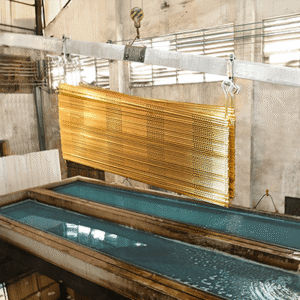
The anodized layer on our aluminium tile trim is a hard, corrosion-resistant oxide finish — not paint — and it’s vulnerable to a narrow set of aggressors: highly acidic cleaners, abrasive scouring pads, and chloride-based descalers.
Routine care is simple: a pH-neutral cleaner, a soft cloth, and prompt rinsing after exposure to pool chemicals or de-icing salts. Skipping abrasive pads alone prevents the micro-scratching that dulls a satin or brushed finish over time.
FAQ
Q1: Can I repair a scratch or deep gouge in aluminum tile trim?
You cannot seamlessly sand or polish a deep gouge out of aluminum tile trim because doing so destroys the protective anodized or powder-coated finish. If the trim is already installed and sealed, your best option is to carefully apply an automotive touch-up paint or metallic enamel that closely matches the factory finish. For severe structural damage, the only true fix is removing the adjacent tiles and grout to replace the metal profile entirely.
Q2: Why does my DIY aluminum tile trim look bulky or mismatched?
Because you chose a profile that is too deep for your tile or selected a finish that clashes with your plumbing fixtures. A common DIY mistake is buying bright, polished chrome aluminum when the room features brushed nickel or matte black hardware. For a professional, cohesive look, the trim finish must match your fixtures, and the depth should be only 1.5mm to 2mm thicker than the bare tile to accommodate the thin-set mortar.
Q3: Which shape of aluminum tile trim should I choose for a modern bathroom?
You should choose a straight-edge (L-shaped) aluminum trim for a sleek, modern aesthetic, or a square-edge profile to frame contemporary large-format tiles. The minimalist L-shaped profile (often referred to as a Jolly) is currently the most popular choice among professional installers because it provides a highly unobtrusive, crisp boundary that lets the tile design stand out, whereas rounded bullnose profiles offer a softer, more traditional look.
Q4: Does aluminum tile trim rust or discolor in a shower?
High-quality, anodized aluminum tile trim will not rust in a shower, but it can occasionally oxidize or pit if exposed to highly abrasive, bleach-based bathroom cleaners. Because aluminum is a non-ferrous metal, it physically cannot rust like steel; however, the anodized coating can be damaged by harsh chemicals. To maintain the finish in wet areas, always clean your aluminum trim with mild soap and water or pH-neutral stone cleaners.
Q5: How do you cut aluminum tile trim without ruining the factory finish?
You must use a power miter saw equipped with a high-tooth-count, non-ferrous carbide-tipped blade and cut extremely slowly. Always tape the cut line with painter’s tape before cutting to prevent the saw base from scratching the anodized surface.